
In the past, Mokhnenko was a fighter against drug trafficking in the Donetsk region, featured in several films, including those produced by RT channel, and the initiator of the bike ride “World without Orphans,” with the last Russian stages taking place after the start of the war in Donbas. Everything changed after the beginning of active hostilities in Donbas. Now Mokhnenko says he is ready to “liquidate” Russian President Vladimir Putin if he had a hypothetical button for it.
After the death of Russian opposition politician Alexei Navalny in prison, Mokhnenko expressed condolences to his wife, Yulia. “Yulia… I am Ukrainian… I have 11 children on the front lines… Six of my sons are wounded… One of my daughters is killed… I am a priest from the city of Mariupol, erased from the face of the earth by the Putin’s horde… Nevertheless, I pray for your family, your children, for your team, and for Russia… for the future post-Putin, post-imperial for a beautiful future Russia, which your Beloved dreamed of… Hold on… “the sun of truth will rise!” – he wrote under Navalny’s post on Instagram.
We learned from Mokhnenko about the work of his rehabilitation center after the start of the full-scale invasion and capture of Mariupol, his ministry as a chaplain, his attitude towards Russian priests, war and forgiveness, as well as why the personality of a Russian opposition politician is important to him as a Ukrainian priest.
According to the pastor, he was born into a typical Soviet family that was not religious in any way. His parents were ordinary workers.
“My dad was a driver his whole life, and my mom worked at a factory. At some point, my parents started drinking heavily. My youth was spent in a family of alcoholics. When I returned from the army, I found my family completely destroyed by alcohol: my father, mother, and older sister were completely drunk, just binge-drinking for weeks. My sister already had two kids by then. I, on the other hand, grew up in opposition to them, watching my parents. I told myself: ‘This is not the path I want to take, I don’t want to live like this,’ so I turned to sports, libraries, and theater premieres. Two workouts a day, I became the champion of the Donetsk region in freestyle wrestling. After the army, I earned money and decided that I would cure my parents, but unfortunately, I quickly realized that money couldn’t solve the alcoholic’s problem.”
“At that time, I was already deeply involved in a religious search. At the age of 24, I became a Christian. Later on, my parents stopped drinking, experiencing religious forgiveness, and ending their lives in a more humane way. My sister went through rehabilitation in my Christian rehabilitation center, and it’s been 25 years since she stopped drinking,” said Mokhnenko.
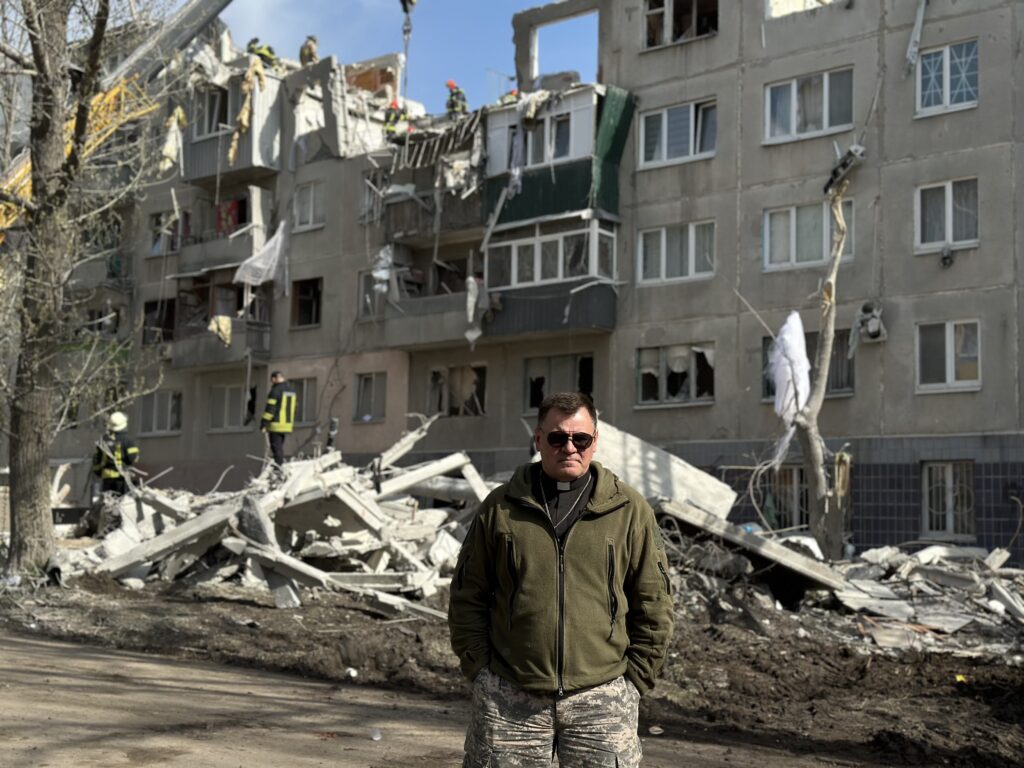
In Wikipedia and some other sources, Mokhnenko is referred to as either a Pentecostal or a charismatic Pentecostal. The pastor himself has referred to himself as almost an ecumenist.
“I grew up in an atheist family, repented in a Baptist church, was preached to by a Pentecostal pastor, graduated from a charismatic Bible school, Catholics feel comfortable behind my pulpit, I am friends with many Catholic bishops, I have wonderful friends – Orthodox metropolitans – of course, not from the Moscow Patriarchate – so try to say who I am. I believe that these are all conditional names of rooms in a big Christian house. It’s good that the house is big: each room has its own rules, orders, but overall it’s one big Christian house. For me, all people who believe that there is a God in heaven are on the side of good, truth, and justice, they are my brothers. If I try to formulate it, I am a Christian pastor of the Protestant reformist tradition,” reflects Mokhnenko.
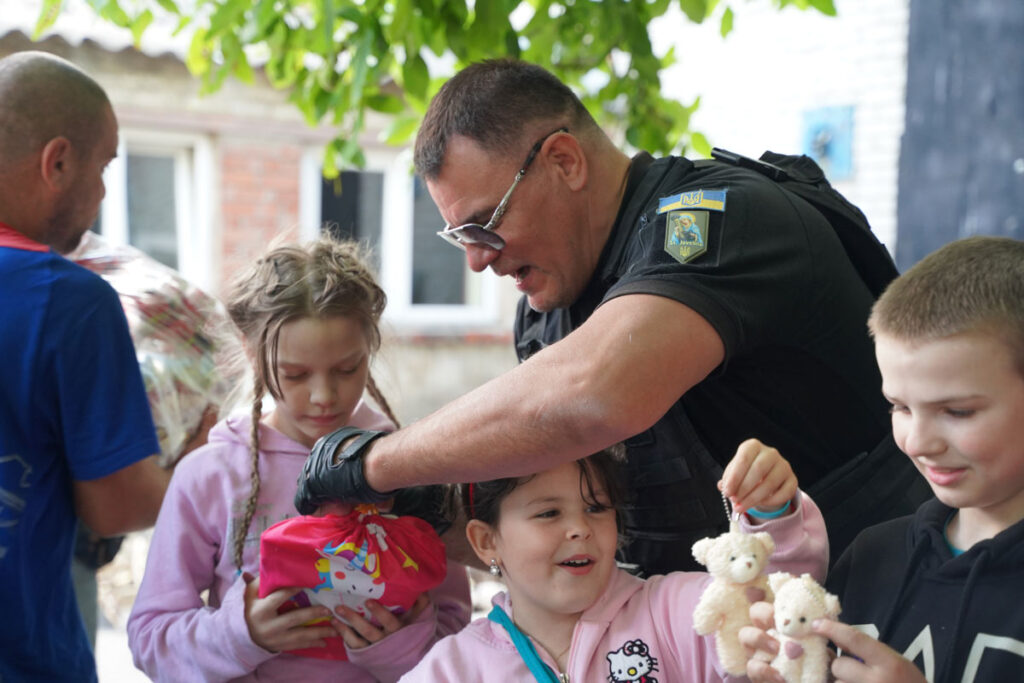
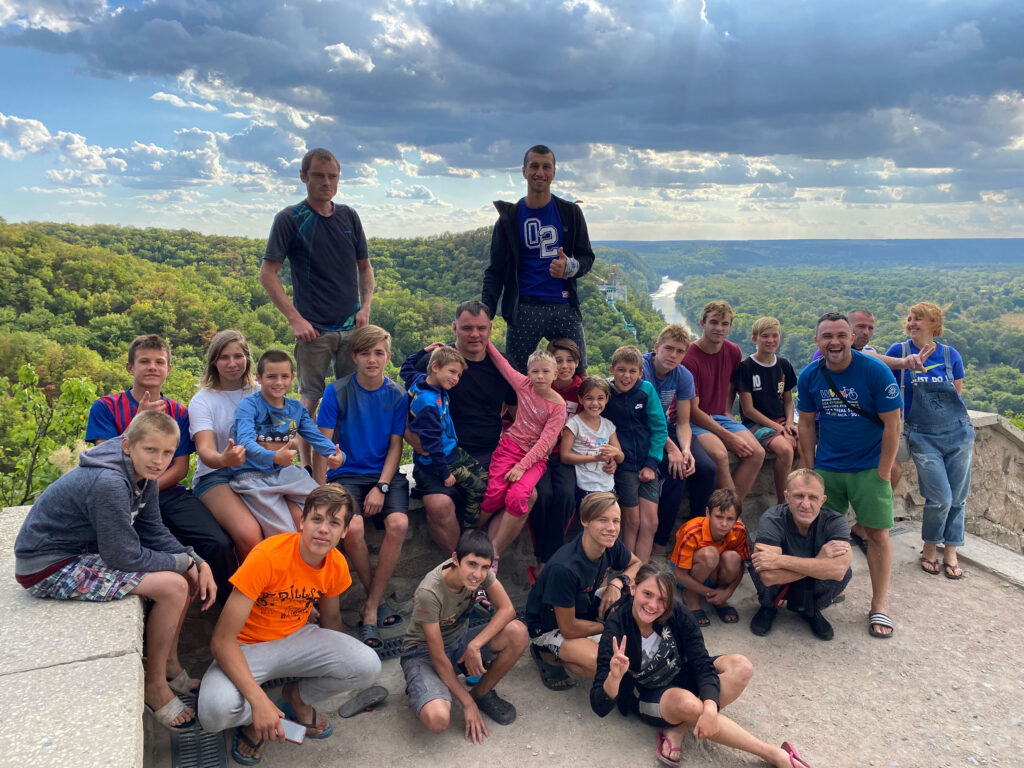
His main creation remains the rehabilitation center “Republic Pilgrim” for children with difficult destinies, including orphans, drug addicts, and HIV-infected children. According to Mokhnenko, over five thousand children have passed through the center during its existence.
“What God? What love? There is no God, no love. My mother threw me out of the house when I was six.”
“When I started my priesthood ministry 33 years ago, we quickly encountered one of the more pressing issues in my city at the time: homeless children,” recalls Mokhnenko. They were everywhere, the city was just teeming with them, dozens at every intersection. They lived in basements, attics, and heating ducts. We crossed paths all the time on the streets. I understand the world of a child whose family has tragedy. That’s my world. I know children’s fears, I understand what it’s like to have parents who are drunk, so I easily and quickly found common ground with them. At first, with my parishioners, we simply started feeding the children together. We collected groceries at the church at the same place and time, cooked food, and fed the kids.
Of course, as Christians, we tried to tell them that they needed to live differently: without drugs, without sniffing glue, without stealing. Understandably, at first, they thanked us for the food, but all our moral instructions elicited open and undisguised sneers from them. Sometimes I heard, “What God? What love? There is no God, no love. My mother threw me out of the house when I was six.” One boy said, “My mom’s lover used to come to our house, I got in the way of their enjoyment of life, and she would put me to sleep on a mat in the entrance. There is no love or God.” But the boys always gathered with us, we talked, ate, somehow inspired them.
One night, this culminated in a knock on the door of the family that helped us prepare food for the boys. The family opens the door, and there stand five eagles, dirty, greasy, infested with lice. One of them was wearing a major’s coat. Apparently, the major had overindulged somewhere, and they had taken his coat. And my friends asked them, “Guys, what happened?” One, the boldest of them, took a step forward and said, “You know, you talked about God back then. Well, we talked it over,” he said. “And we decided that God exists! Take us to the pastor and enroll us as believers.” This family washed and groomed them all night, then spent a month at home getting rid of fleas and lice. In the morning, they brought them to me at the church. That’s how our “Republic Pilgrim” began.

American director Steve Hoover made a documentary film about the work of “Pilgrim” titled “Almost Holy.” Mokhnenko, in an interview with Radio Liberty, lists numerous awards the film received and mentions that one of the co-authors of the film, Terrence Malick, has been nominated for the Oscar several times. A film about Mokhnenko was also made by the Russian propaganda channel Russia Today. The film received an award at the Russian film festival “Hero of Our Time” in 2015, after the start of Russian aggression in Ukraine.
People don’t need legislation to do good
In the film ‘Almost Holy,’ there are scenes where the pastor takes children from troubled families without having any documentary justification for it. When asked about how right it is to go against legislation in such cases, Mokhnenko responds:
“People don’t need legislation to do good. Each person knows within themselves where good and evil lie. If you’re walking down the street and you see a child lying there, high on glue, and you find out that they live in the neighboring basement, that they come from a broken family, it’s not even clear where they came from. We never found parents for many of them. In such cases, I don’t need a separate law. Ideally, of course, it would be the government’s responsibility to deal with this.
When we started taking children off the streets, the government had Child Protection Services, the Criminal Police, orphanages, and children’s homes, but none of it worked because of bureaucracy. That’s why private initiative always prevails over the government. For example, Child Protection Services would go out, catch children, and then by law, they were supposed to be taken to the hospital, where they were supposed to undergo a three-week quarantine. So, a 12- or 13-year-old drug-addicted child is taken off the streets, brought to a regular hospital, and there are no special hospitals for drug-addicted children. The child is handed over to the doctor according to the protocol. Child Protection Services says, ‘You take care of him here for three weeks,’ and then they turn around and leave. The doctor asks the kid, ‘Are you going to run away?’ And the kid, while spitting out drugs or wiping glue from his nose, says, ‘Of course I will.’ And the doctor says, ‘Okay, good luck.’ Because the doctor knows how it will end. The kid will steal someone’s bag, rob a couple of patients, and leave with other people’s wallets. That’s where the work of government structures ended.
When we appeared on the streets, we said, ‘This won’t work. If there are no specialized hospitals, then we ourselves will fulfill this function.’ We took the children, hired medical workers who examined them. In critical cases, we turned to the hospital. The children were simply under our control: we helped them overcome withdrawal symptoms, brought them back to consciousness. Then they had a chance to make decisions. At first, our actions were not understood by our officials, and there were many conflicts. When street kids worked for the police, and we interfered with their business by taking the children away. The children were working for the drug mafia, and we started to disrupt their scheme, which later turned into a full-scale war.
Later on, our contributions were finally recognized. When the mayor of Mariupol came for the tenth anniversary of the ‘Republic Pilgrim,’ he delivered a prophetic speech. By that time, we had cleaned up the entire city – manholes, attics, dens. He said, ‘Pastor, laws will be written for what you are doing in ten years, but I want to thank you for doing good without fear.’ Homeless kids were shooting up drugs right outside the mayor’s office. There was an abandoned pool under the city hall, and nobody could do anything about it.
“By the way, one of those who used to shoot up drugs outside the mayor’s office became a Hero of Mariupol and saved many lives. He was one of our drivers who evacuated people across the front line. He got married, and now he has a little child,” said Mokhnenko.
Today, according to his words, the problem of homelessness in Ukraine is not as acute. However, he notes that the war has created new challenges:
“If I drive to a supermarket in a frontline city right now, children will immediately run up to me and ask for money for bread because their mothers have nothing to eat. This is not the same problem: almost all the children live at home in normal families. There, it’s more about working with the mothers so that the children don’t end up living like this.” Mokhnenko also doubts that all children in the occupied territories of Ukraine receive adequate assistance and supervision. He assumes that upon returning to Mariupol, he will have a lot of work again.
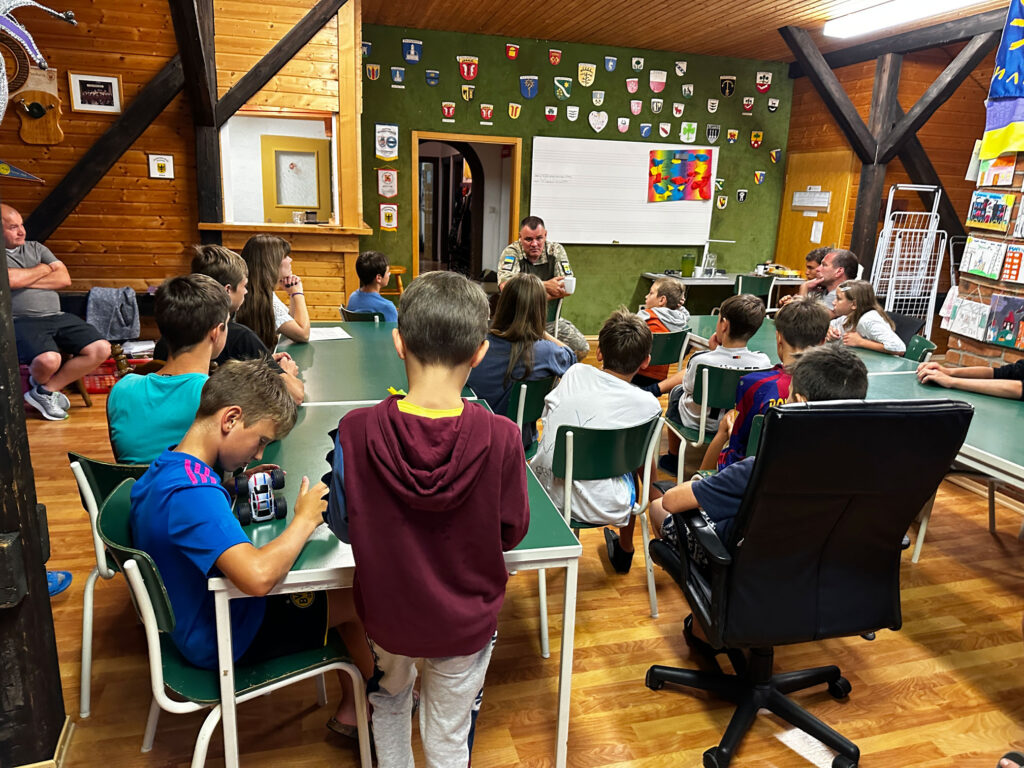
“Currently, the ‘Republic Pilgrim’ center continues its work in Germany. According to Mokhnenko, children were evacuated from Mariupol ‘racing against Russian tanks.’ ‘The last minutes before the city was blocked. For the past two years, I have been haunted by the most terrifying dream in which I didn’t manage to evacuate the children. The intelligence gave us 40 minutes to leave. We managed to evacuate the children, but I have a holiday coming up: in a few days, I’m going to meet our children’s center; they are returning from Germany to Ukraine – to a beautiful place in the Carpathians. Our friends bought us a nice camp, and we are currently finishing preparations there for the children to return to Ukraine,’ the priest shares.
Mokhnenko also recalled the project to combat drug trafficking called: ‘Sick of it’ which started in 2005. He and other concerned individuals fought against the sale of tramadol and other opioid drugs – often sold to children. According to the pastor, thanks to the actions of activists, drug traffickers were losing up to two million dollars per month.
We buried many children. Many kids died
“This figure was calculated by journalist Andrey Tsaplienko. He conducted an investigation into our actions. He arrived at such a number only in the Donetsk region. We saw that Ukraine was flooded with cheap drugs, horribly frightening, rapidly destroying children. We saw that this drug was taken out of the category of narcotic drugs and simply classified as medicinal. This opened the way for the tramadol mafia. The Horlivka plant ‘Stirol’ simply opened entire workshops for the production of tramadol, and the country was flooded with cheap, terrifying drugs. Schoolchildren began to buy drugs with their pocket money on the way to school.
We buried many children. A lot of kids died. At some point, we simply said, ‘We won’t just resuscitate and bury children; we will go against the dragon that is causing all of this.’ We held a campaign in Mariupol, then it spread to Donetsk. Eventually, we reached the point of picketing outside the Verkhovna Rada, the Presidential Administration. Children held photos of those killed by drugs in their hands. And, I must say, it worked. In the end, we not only saw the arrest of drug dealers and police officers but also the change of legislation in Ukraine. This reminds me of my favorite phrase of Alexei Navalny: ‘All that is needed for the triumph of evil is that good people do nothing.’ I still meet people who thank us for saving them from tramadol. They hated us back then, but now they are grateful.”
What projects of yours, besides “Pilgrim,” continued to exist after the start of the full-scale invasion?
All our property in Mariupol has been seized, some destroyed, and Russian soldiers sleep in our homes. Our church building in the city center was burned down, but it saved thousands of lives. We had the most luxurious bomb shelter in the basement. When the drama theater was destroyed, nine-story buildings collapsed, our church building stood. We prepared it in advance: bought mattresses, generators, food, water. When bombs fell nearby, we showed cartoons to the children on the projector, gave gifts, and held contests.
We evacuated everyone from there; only one man died. He went out of our building to smoke and was killed by shrapnel. Another grandfather died during transportation: his heart just couldn’t handle it.
The premises are seized, but some centers have continued their work. For example, “Little Mother” is a project for women in critical situations with children. They are on the verge of losing parental rights, husbands abuse and beat them. To give these women a chance to keep their children, so they wouldn’t be left without a mother, we opened a logical continuation of the “Pilgrim Republic”. It is also currently located in Germany, but we have a branch in the Kharkiv region. The rehabilitation center is also operational. In many cities, there are our graduates who once struggled with alcohol or drug addiction. Today, they are already serving other people. Once they barely made it to our center, escaping from drugs or alcoholism. Today, they have their own families, some have businesses, some are fighting – there are many of them.
-The word ‘chaplain’ is not new in the history of global wars, but concerning Ukraine, what exactly is the role of a chaplain in this war?
Our task is to help people remain human in war.
In Western society, the civilized world, the army represents the people with values. People for whom concepts of morality, truth, and freedom are not empty words. The army, finding itself in military confrontation, needs to maintain the most important factor -Spirit. If the spiritual state declines, everything collapses.
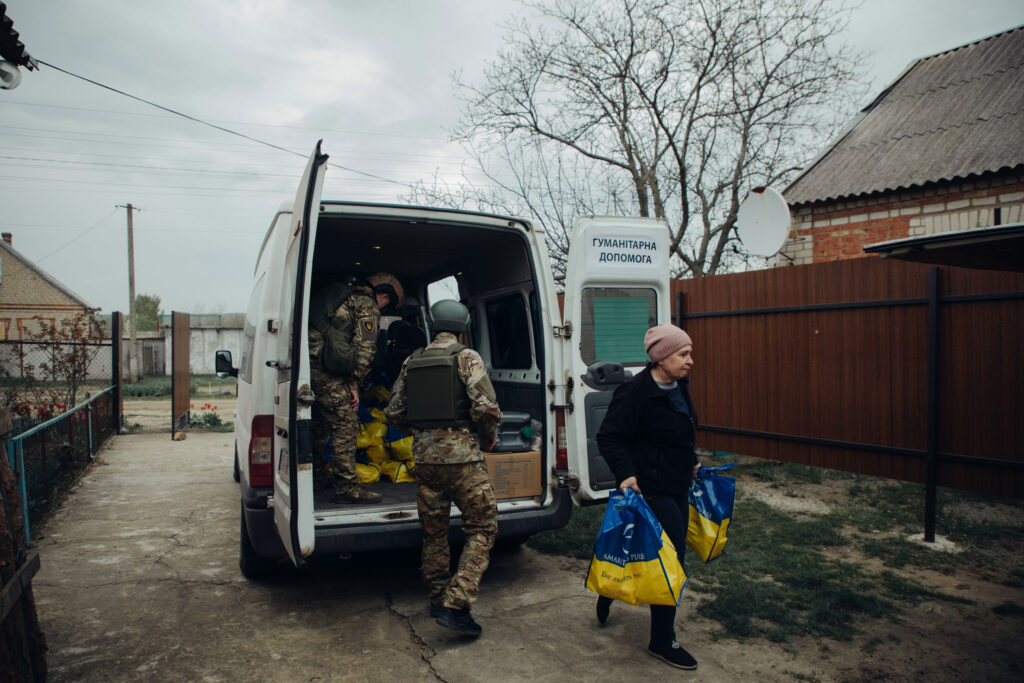
A chaplain is someone who can be there for a soldier, communicate with them, encourage them, just listen, and help in some way. Our job is to travel along the front lines, where we have friends in dozens of units. Or we simply drive along the front line, getting to know the guys and commanders. Today we handed over the 162nd vehicle to the army, we have a mobile dentistry unit, and there is a car repair station for the military.
At war, people can become savage. It’s easy to lose our humanity in war. If we allow ourselves to do so, we will cease to be the army that can claim to fight on the side of light and goodness. If we mock the wounded, engage in looting, rape, or torture, we will become like our enemy and lose the support of conscience, angels, justice—Heaven, in general. Our task is to help people remain human in war.