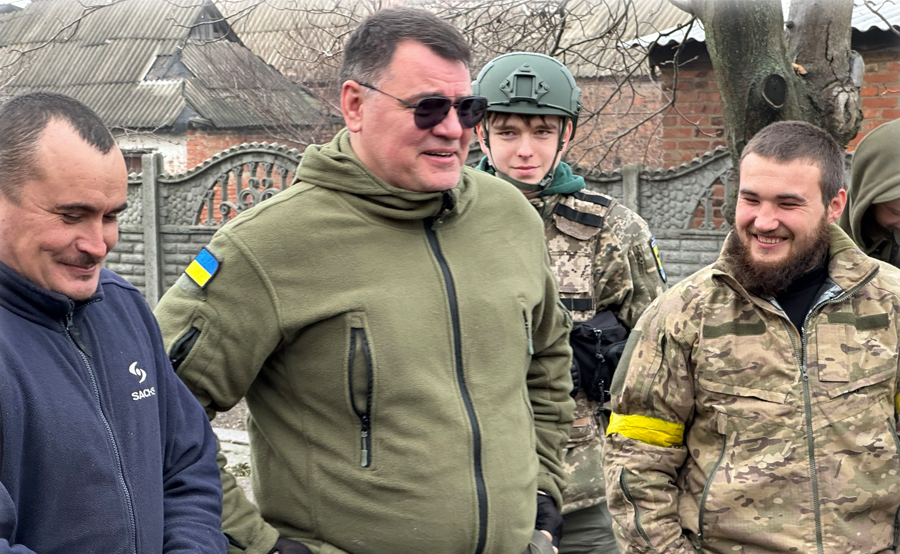
Pastor of the “Church of Good Changes” and chaplain of the Armed Forces of Ukraine, Gennady Mokhnenko, once founded a children’s rehabilitation center “Republic Pilgrim” in Mariupol, which opened its doors to hundreds of “difficult” teenagers and orphans.
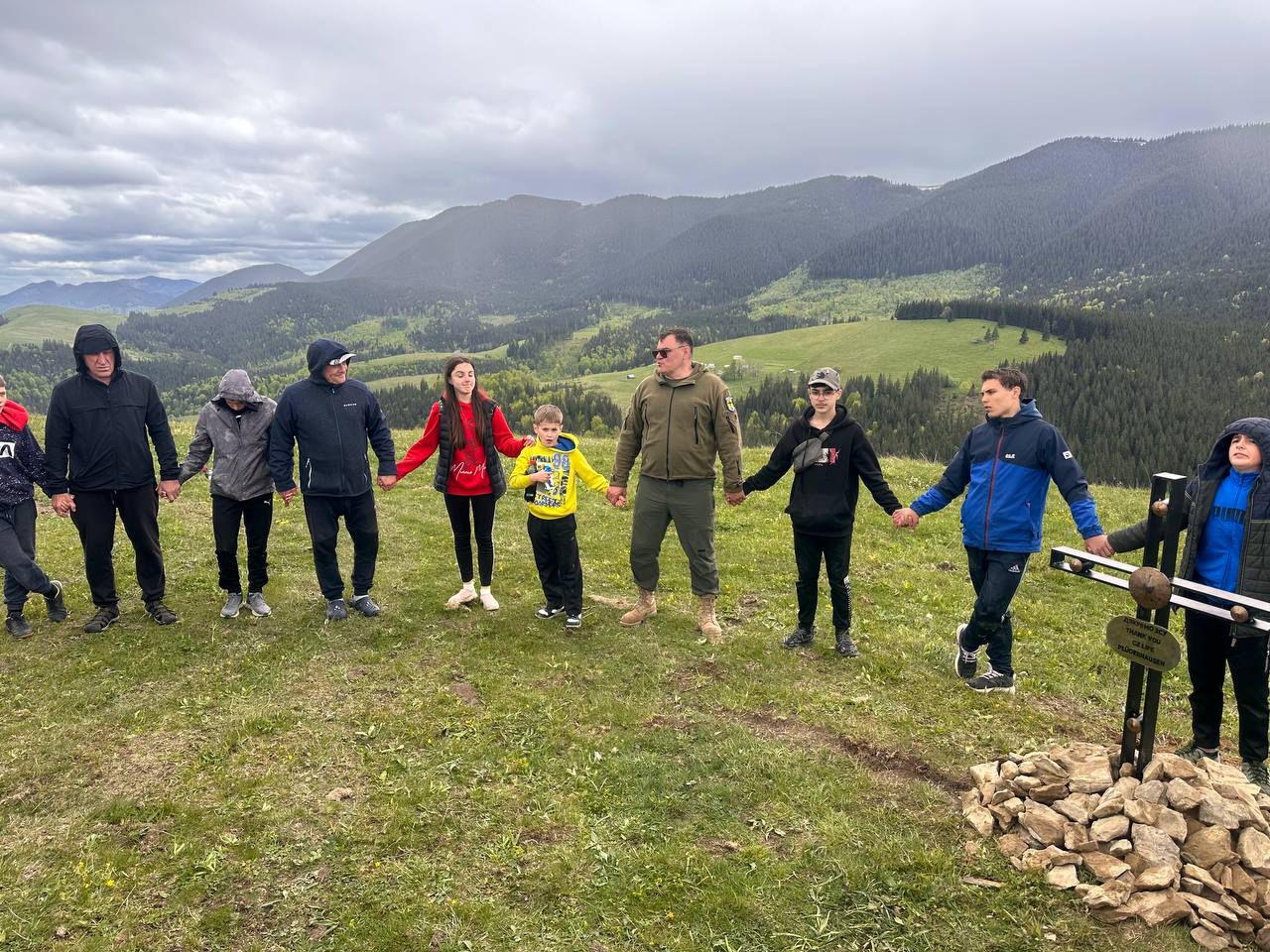
A correspondent for the online news agency Ukrinform asked Gennady in Ivano-Frankivsk, where the chaplain arrived on the first day of his vacation, about the fate of the Pilgrim Republic and its students during the war. The chaplain arrived in Ivano-Frankivsk on the first day of his leave. The pastor-chaplain will spend several days with the children in the Carpathians, installing crosses on mountain peaks. At each peak, children and adults pray together and thank the Lord for the lives and strength of the soldiers and all Ukrainians, as well as for the Ukrainian military, who make it possible to live in Ukraine and bring the victory over the enemy closer.
Artem
“On the evening of February 24, we managed to evacuate mainly teenagers from our center, children from foster families, and women from Mariupol. We received an order from intelligence and a warning that we had only 40 minutes,” recalls Gennady Mokhnenko.
That day he did not plan to leave the city, but was preparing with his sons to defend his hometown Mariupol. At that time, the pastor had eight years of chaplaincy service in the east part of Ukraine.
“The children had their emergency backpacks packed, and we had an evacuation plan just in case, but we didn’t expect to use it so quickly. After 38 minutes, the convoy of children and women was already leaving the city. I had only eight minutes to take what I needed from home: we understood that the military had given us the last chance to get out of Mariupol. I am grateful to the Lord and the Ukrainian intelligence that I did not witness the worst that could have happened to everyone,” the pastor admits.
Gennady recalls that the convoy of cars, with more than a hundred children and women, raced against Russian tanks surrounding the city from the other side. Mokhnenko was ordered not to stop and to drive faster. Ukrainian soldiers provided them with a green corridor.
We managed to evacuate the residents of the rehabilitation center and women to a safe area far from the military actions. They were then evacuated to Germany. Meanwhile, Gennadiy Mokhnenko, along with his adult sons and chaplains, decided to return to Mariupol, where his older children and parishioners of the “Church of Good Changes” remained. However, they were unable to break through to the city.
The care of the townspeople hiding from shelling in the Church’s shelter was taken over by Gennady Mokhnenko’s adopted son, Artem. He was 28 years old at the time. Artem, like most children of the “Republic Pilgrim,” is an orphan. At one time, the pastor took him off the street.
“We were preparing for a Great War. We bought mattresses, diesel generators, and water for the Church’s shelter… We expected it to accommodate up to 50 people, but there were many more,” Artem shared his memories.
For several days in a row, he procured water and food, and when he realized that the Russians were destroying the city, he decided to evacuate people.
“The occupiers stopped people and threatened them,” says Gennady Mokhnenko. “Some tried to break through by car, but they were shot. Artem decided to drive through minefields. He rode in the first car himself and ordered the others to turn back immediately if they saw he had exploded. We met the first convoy at the front line. We couldn’t believe everyone survived. Women and children were crying. Artem felt very bad, was barely alive because he had prayed and fasted a lot for everything to work out. He decided to return to the city again. Then there was the second, third, and fourth convoy… This way, my son and his team evacuated about eight thousand people from Mariupol. The UN evacuated zero people, as did the Red Cross, but mine were evacuating and saving people. Yes, they even paid money to the Russians, bartering with vodka, which I bought in boxes, but they took people out… My son only stopped when the Russians threatened to shoot his car. But he changed drivers, cars, and continued to evacuate people.”
Now Artem is on the front line with Gennady. He married a girl he evacuated from occupied Mariupol, and the newlyweds are expecting a baby. Gennady Mokhnenko is preparing documents to honor his son’s heroism.
Based on this story, film producer and writer Sergei Rozvadovsky has already written a screenplay for a movie.
“Now Sergei’s dream is to find Hollywood actors to play my son, my friend… Do you know how the film will begin? A homeless boy climbs into our children’s center at night, into the accounting office, from where he throws a safe with money out the window. This is a real story about Artem, and now my son is a Hero,” smiles the father of many.
Slavka
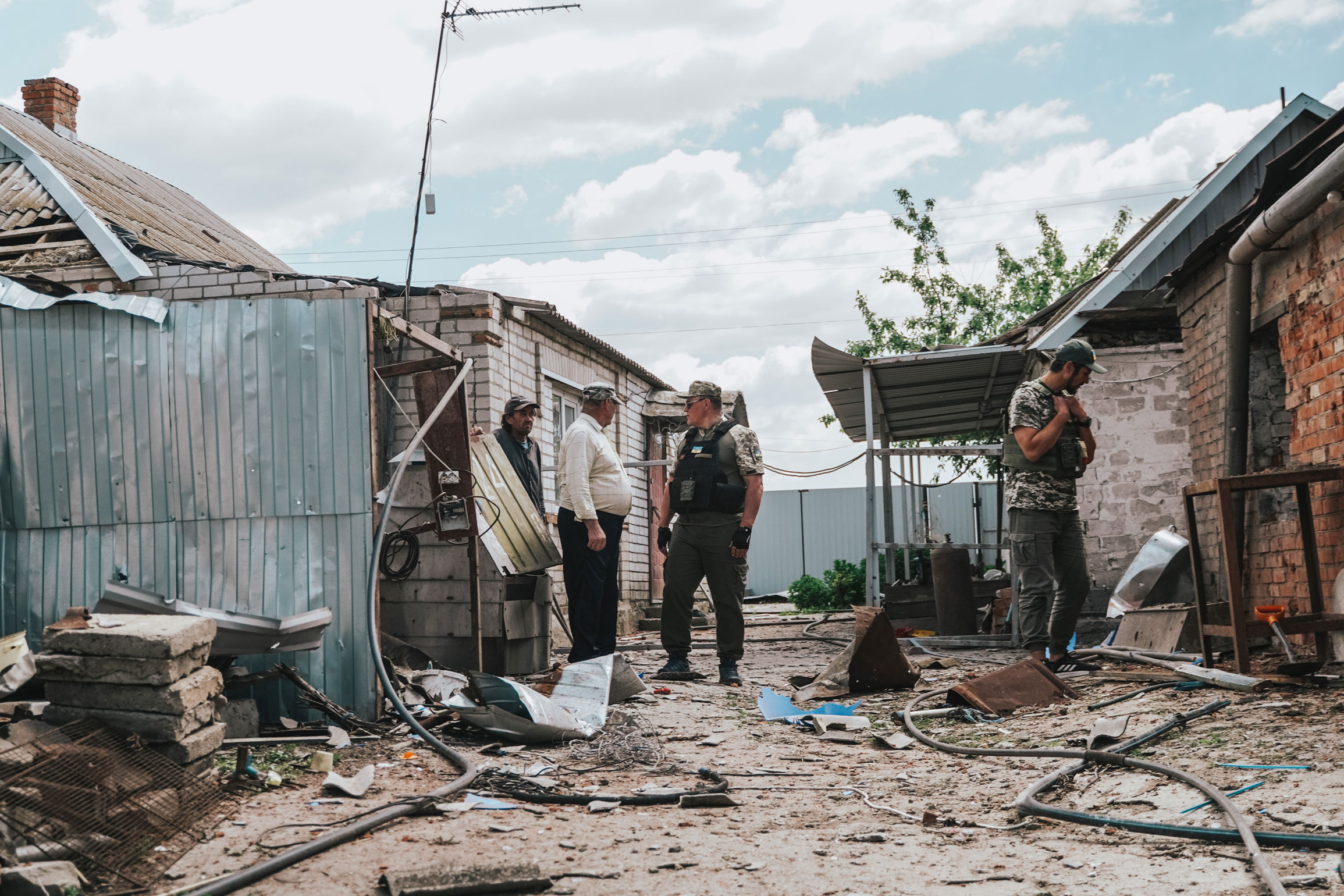
Together with Gennady Mokhnenko on the front line are not only Artem but also ten other sons. Six of the have been injured. Slavka has suffered the most. In the war, he lost an arm, has two fingers left on the other hand, and has numerous shrapnel in his legs.
The pastor recounts that Slavka lived on the street since he was five years old. When he was ten, he ended up in a juvenile correctional facility for breaking into someone’s house and eating borscht straight from the pot he found in the refrigerator.
“At 13, Slavka came to ‘Republic Pilgrim’ and became its president, and then my son. He is also a hero. He fought since 2014. He returned to the front at the beginning of the Great War. He was with me when we tried to break into Mariupol in the early days of the occupation. Once, I said we were leaving the front to get some sleep and then try to enter the city again, but he jumped out of the car and ran to our troops. I couldn’t do anything but ask the commander to take him as a scout, considering his many years of experience. And they kept him. That night, many Russian tanks entered the village of Rozovka, and my son and our soldiers were surrounded. In the morning, I learned that the occupiers had taken Rozovka, and for the first time, I mentally buried my son,” admits Mokhnenko.
Two days later, the chaplain received a call from an unknown number. It was Slavka. He and a comrade were in the basement of an abandoned house. The commander had given them orders to try to break out of the encirclement.
“There are thousands of Russians in the village, who destroyed our equipment… I had hope, but then three weeks of silence, and I mentally buried my son again. But then another call: ‘Father, we are alive. But we have no strength or food left. We have no choice but to try to get out again.’ And I had hope again. Then some woman called and said that my son and his comrades had died… A few days later, when we were driving from the front, my friend received a call. I saw him crying. He said, ‘Do you want good news? Slavka and Misha are already in our car, they got out of the encirclement,’” recalls Mokhnenko.
Slavka quickly recovered and returned to service. Later, he was among the first Ukrainian troops to enter liberated Kherson. That was almost the first time Slavka cried with happiness. He continued the fight in Bakhmut. He was hit by an enemy drone. There was a powerful explosion. He woke up in the hospital.
“Slavik only asked that I not be too angry with him. He said he promised to stay alive, but he didn’t promise anyone that he would stay whole,” says the father of many.
Vika
In the war, Gennady Mokhnenko’s adopted daughter, Viktoria, was killed. The pastor’s family took her in when she was 10 years old. Also an orphan, she came to “Republic Pilgrim” from the street. Her life ended at 28.
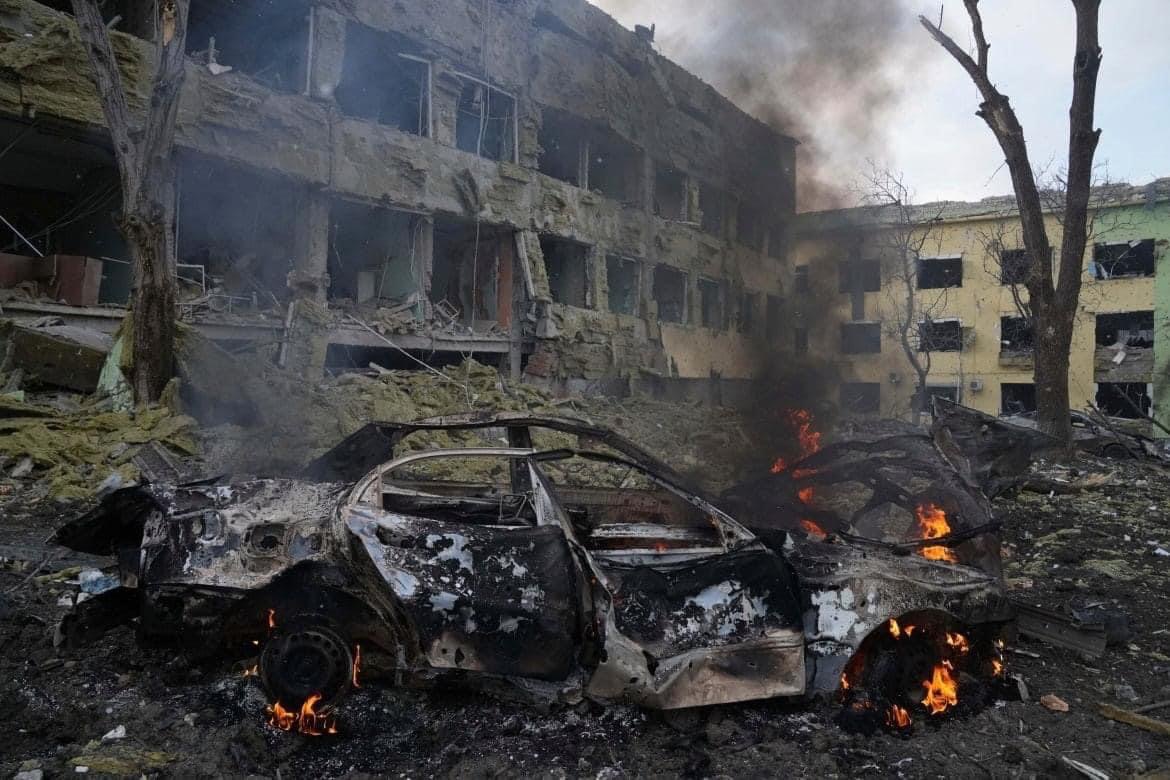
“It happened in Mariupol. At that time, we were evacuating everyone who could get to our Church. Unfortunately, my daughter couldn’t. She was already living separately from us. For a long time, we didn’t know where she was… Later, I received information that the occupiers had shot her house with a tank. I know the place where her torn body is buried,” says Mokhnenko.
Semen
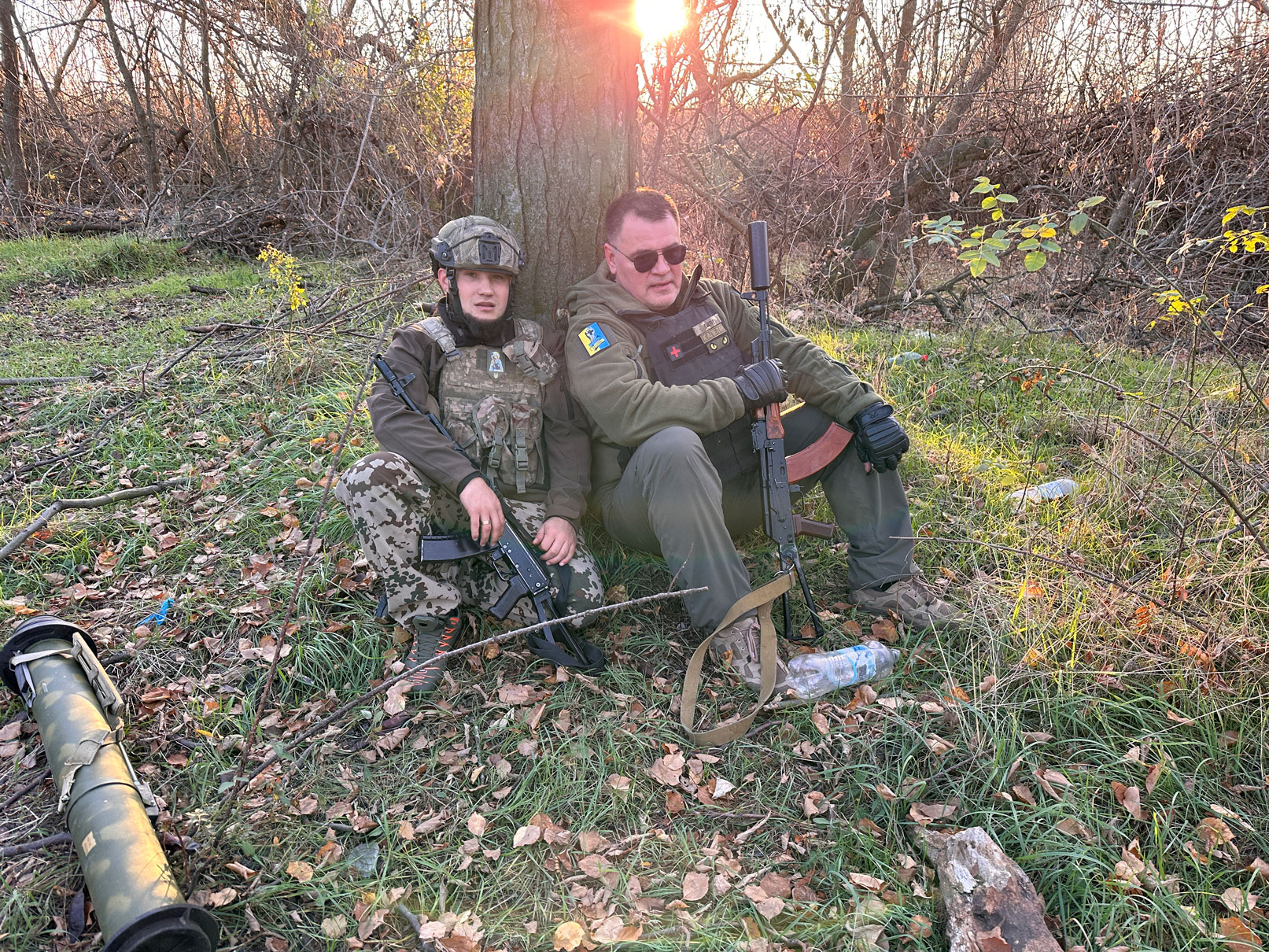
“I have three biological children: two daughters and a son, Semen, the youngest. He is currently studying in the USA. But he is already a hero. When the war began, he was 14 years old. A few months later, he asked to go to the front. On Christmas 2022, Semen came to Germany to visit his mother and asked for her blessing to go to his country for a week… He came to me at the front. We were together under shelling in Bakhmut and Orikhove,” recounts Gennady Mokhnenko.
He says that Semen admitted that he will never forget how he brought gifts to children, how the apartment buildings shook from the explosions, and how he worked with his father on the front line as an assistant chaplain for the Armed Forces of Ukraine.
“I am proud of my youngest. He still wants to go back to Ukraine,” Mokhnenko smiles.
100 CROSSES – ON 100 CARPATHIAN PEAKS
– What principles do you use to raise your children? Do you have any form of punishment for the children, or do you allow them to do anything?
– I once wrote “An Unpedagogical Poem,” whereas Makarenko, if you remember, had a “Pedagogical Poem.” My work is a book where you can both laugh and cry. It tells the story of the unique children’s center “Republic Pilgrim.” It probably has answers to the question about upbringing… Did I have punishment for the children? Yes, and I also allowed them everything. The best thing we can do for children is to live alongside them and set an example. They don’t adopt principles; they copy us. Why do I have 11 children on the front line? Because I’ve been there for 10 years. Even when I tried to stop Slavka, he reproached me, saying that I taught him to protect the weak, that freedom is worth fighting and even dying for… He said he would be guided by this in life.
– How many of your children are currently living in Western Ukraine?
– Not many. Only two adopted children – a son and a daughter. Twenty-one children returned from Europe, where they were evacuated. For me, it’s a terrible story, described in the novel “The Final Episode of the War That Lasts 400 Years” by Yevhen Polozhiy (he shows the book). The full-scale invasion changed our plans, but the book tells a story about February 24th when two children, Serezha and Masha, were supposed to stay overnight at the pastor’s house. My wife and I wanted to invite them to join our family. They sensed it, but we had to evacuate everyone, scattering the family across the world. Now, when they have returned from Germany, they have officially become my adopted children. In the Carpathians they live with their friends, students of the Pilgrim Republic, who also returned from Germany.
There, we founded the project “100 Crosses – On 100 Carpathian Peaks” with the children. Tomorrow, we will carry the fifth cross to a peak – as a thanksgiving to the Lord who saved the children and gratitude to the Armed Forces of Ukraine. I want my children to understand the price our soldiers pay so that they can return and live in Ukraine.
– Do you still have a home in Mariupol? Is there somewhere to return to after the de-occupation?
– More than 90 percent of the people from my Church have left and are scattered around the world. Our Church is occupied. First, the Russians burned it, then they repaired it to create a social center there. They turned our children’s home into their military commandant’s office. Russian soldiers now sleep in my house, in my children’s beds. Meanwhile, we are all wandering. The only thing that brings joy is that our children’s center now has its own camping site in the Carpathians. When I first saw this place, I thought it was paradise; it’s so beautiful there. But when I heard the price, I knew it was unrealistic for us… However, my friends, who once organized a round-the-world bike trip with the children, started raising funds. They first bought one part of the house for us, then another. Thus, we got a wonderful center, with a spring on the property. In the morning, I turn into a beaver for the kids, diving into the spring after our morning exercises. It’s a very beautiful place where I can forget about the war. We are renovating the facilities and preparing to welcome new children. Now, I dream of my sea, its smell, and the unfinished house in Mariupol that my children dreamed about. And I also dream of returning to my hometown, just like most of my friends. They are fighting for that day and risking their lives every day. We will definitely return.