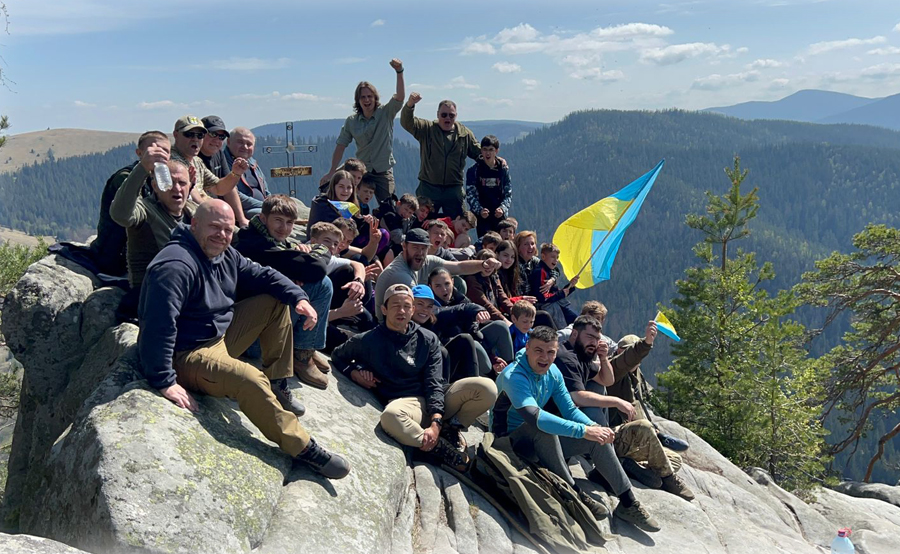
How did we survive before? We had 17 children in a house that was 54 square meters. It was complete madness: bunk beds were lined up, and some kids slept on mattresses between them. It’s a terrible story, but these children just weren’t being taken in by anyone. Most of my foster children have very difficult and challenging life stories. Not everyone is ready to adopt a 12-13-year-old child who had got a drug experience and sexual experience. They didn’t fit into regular orphanage; they would just run away.One of my sons has escaped more than 100 times, so there was no point in sending him there for the 101st time.

So we huddled together in a cramped space. Then we started building a big house: three floors, sea view. My children helped me build our big house for several years. We waited for each of them to move into their own room. In this community, we had 20 houses: foster families lived there, there were rehabilitation centers, a chicken farm, greenhouses. And now there are Russians living there. I strangely even feel sorry for them to some extent. God in the Bible calls Himself the Father of orphans hundreds of times and says that anyone who touches the orphans will have big problems. These soldiers sleep in the beds of children who once lost their families. We gave a family to them. Now the children are scattered all over the world.
Gennady’s wife, Elena Mohnenko, has been ill in recent years. According to Gennady, her health was undermined by the Russian invasion in 2014. “She is absolutely unique, the number one gift in my life. To live such a strange life that we’ve lived… I hope it’s not over yet. Our wedding budget was three Soviet rubles. I bought a bouquet of flowers for one ruble, cookies, and tea. That was the whole wedding. In six years, we changed 16 apartments. Then we went through a war with drug dealers, threats of reprisal from gangsters.
In 2014, she was a healthy woman who, at night, with a smile, evacuated children while I cried from fear, but then all that stress took its toll, and she fell ill. Three days in a row before the full-scale invasion, there was intensive care in my house. We had to call an ambulance. Imagine the situation: my wife critically ill for three days, and rockets start falling. She needs to be evacuated, but I have children’s homes, foster families in Mariupol, and I can’t go with her. I wasn’t sure they would get her alive to western Ukraine.
The pastor’s 11 children are now on the front lines: 10 sons and one daughter. Six of his sons have been wounded. “One of my sons is currently in the hospital. Doctors say he miraculously survived. Shrapnel hit an artery and both legs. If it had been another forty seconds, he wouldn’t have made it. He was already unconscious. Another son of mine is an absolute hero. He volunteered back in 2015, fought for three and a half years in reconnaissance, a very experienced guy. He was an orphan from the age of five, by the way. At ten, he was arrested and thrown into a children’s prison – a closed boarding school. All he stole from the house he broke into was a pot of soup. For this, he was sent to the boarding school for three years. Then he became my son. February 24, 2022, caught him in Mariupol. We evacuated children together, and then he tried to break through with us to Mariupol. My son stayed in Rozovka, where he got surrounded. Over the next three weeks, I buried him in my mind three times. In the end, he managed to break free. I cried, of course.
He returned to the army and, together with his legendary commander “Kurt,” was one of the first to enter Kherson. In Bakhmut, he lost a wrist after a drone strike; only two fingers remained on the other hand. He had his eye lens replaced, with plenty of shrapnel in his legs. Now he’s retired from the army, at home. He has three children. My friends bought him a house, and his biological mother, also disabled, lives with them.”
They showed me the place where pieces of my daughter are buried in the ground.
One of Mohnenko’s daughters died in Mariupol. “Even before that, we had been traveling the frontlines as chaplains for eight years. So the children had their backpacks and documents ready. We evacuated all the younger children from the city 40 minutes after the order from our reconnaissance, but with many of my older children, who already had their own families, we didn’t even manage to get in touch. One of my daughters, along with her little one, was in Mariupol, and we had no communication with her. After several weeks of unsuccessful attempts to find out about her, her neighbors informed me that the occupiers killed my daughter with a tank shot at the house where she lived. They showed me the place where pieces of my daughter are buried in the ground. We will definitely come back, re-bury our loved ones, rebuild our cities, because in the end, light always triumphs over darkness, no matter how long the journey may be,” the priest is convinced.
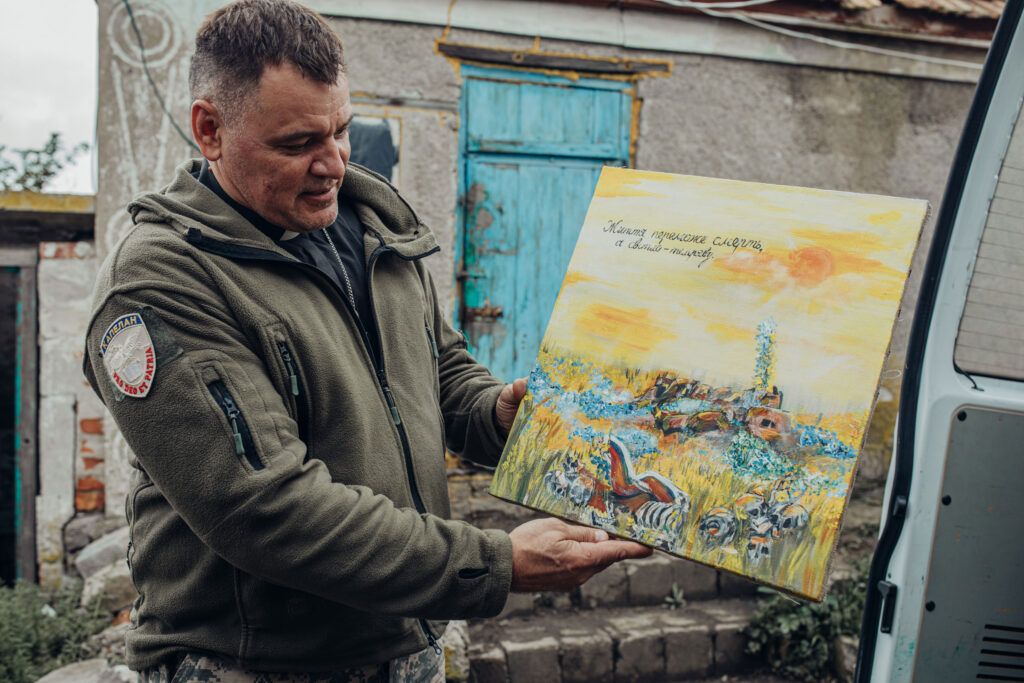
After the start of Russian aggression in Donbass in 2014, Mohnenko, along with his children and children from the “Pilgrim Republic,” completed a world bicycle tour called “World Without Orphans” across Russia. Among the sponsors of the event were many public figures, artists, and deputies from “United Russia.” The entire tour was covered by Russian propagandists, and overall Mohnenko was well-regarded in Russia. However, six months after these events, the pastor stated in an interview that he would be willing to “eliminate” Vladimir Putin if he had the hypothetical opportunity. When asked about the turning point in his relationship with Russia, Mohnenko responded:
We completed a round-the-world bycycling tour with my children, covering 27,000 kilometers, and visited dozens of countries. Before the war, we traveled across all of Russia – all the way to Vladivostok. This campaign was supported by the Administration of the President of Russia, the Federation Council, and the Public Chamber.
The purpose of the action was to encourage the adoption of orphans. We are advocates for adoption. We motivated Russians. We dream that every orphanage would close. So that all children would wake up and embrace a father and mother.
We were welcomed with bread and salt, concerts were organized in our honor, and we gave hundreds of press conferences. Mayors, governors, and deputies of the State Duma cried during our speeches. The situation was such that we were approaching Vladivostok – and active military actions began in Donbass. It was a complete shock. Naturally, we began to talk about it to Russians who were completely bewildered. They said to us, “What do you mean?” They told us, “Some Nazis attacked you!” Well, we asked – listen. We started talking about how Russian soldiers are killing our children. Of course, everything escalated to the point where the FSB was present at every press conference, but we continued to tell the truth.
However, we made it to Vladivostok, then returned to Mariupol. We had just returned from Russia, barely had time to rest, and the Russian army went into Mariupol. Seeing Russian tanks, how they shoot our people, how they bombard our cities with “Grad” rockets – it was beyond my strength. I love all people, I’m a priest, there’s no difference for me, but I hate Putin’s KGB filth. I hate everything related to the words “FSB” and “KGB”. It’s the most bloody filth. I’ve been anti-Soviet since childhood. At the age of 13, I read “One Day in the Life of Ivan Denisovich”. I hate everything associated with the concept of the bloody empire called the USSR.
My favorite quote over these two years is from Martin Luther King: “Evil may seem to triumph over good. Jesus on the cross, and Herod in the palace, but there will come a time when Herod will be remembered as a villain of the era of Jesus Christ. The years of Herod’s reign and death will be counted from the birth of Christ. The moral arc in the Universe is long, but it always bends towards justice.” Hitler disappeared somewhere, where did Pol Pot go? Where did Pinochet, Gaddafi, Osama Bin Laden, Nero go? I am convinced that there will come a day when Russian textbooks will write about the shameful war in Ukraine, unleashed by KGB and FSB scoundrels.
If we’re speaking generally about war and religion, things that don’t seem to match, can a religious person kill?
Our post-Soviet Christianity was shaped by the Soviet era. It’s like Soviet-made theology. When I was a young man approaching the church, they explained to me: ‘If you become a Christian and see someone mistreating a girl, you can’t intervene. You must pray for God to send someone who will intervene.’ I thought, ‘You Christians are moral monsters. I don’t want anything to do with you.’ Later, I realized that this has nothing to do with Christianity at all. Christianity never taught that. The idea of radical pacifism is nonsense. It’s not in the Bible. I want to remind you that there are a lot of Texans in the U.S. Army, and in Texas, eight out of ten people grew up in churches. You could say that the U.S. Army is largely made up of Christians.
Indeed, Christianity has always distinguished between different kinds of killing. The issue lies in translation. In English, there’s one expression: “Thou shalt not kill.” In the English Bible or in ancient languages, it’s much clearer. There’s the concept of “killing as a crime” and “killing in self-defense”: murder and kill.
Classical Christianity never taught that one cannot stop a murderer or a rapist. Soviet theologians have distorted our understanding. We have a significant number of Christians on the front lines. In just one unit, three pastors among my friends are fighting: a sniper, a mortar operator, and a drone operator. And of course, these guys are not murderers in any way. It’s understood that if you can stop with a word, a pat on the shoulder, that’s great. But war is a situation where all these steps don’t work. You have to fight to defend freedom, dignity, and truth.
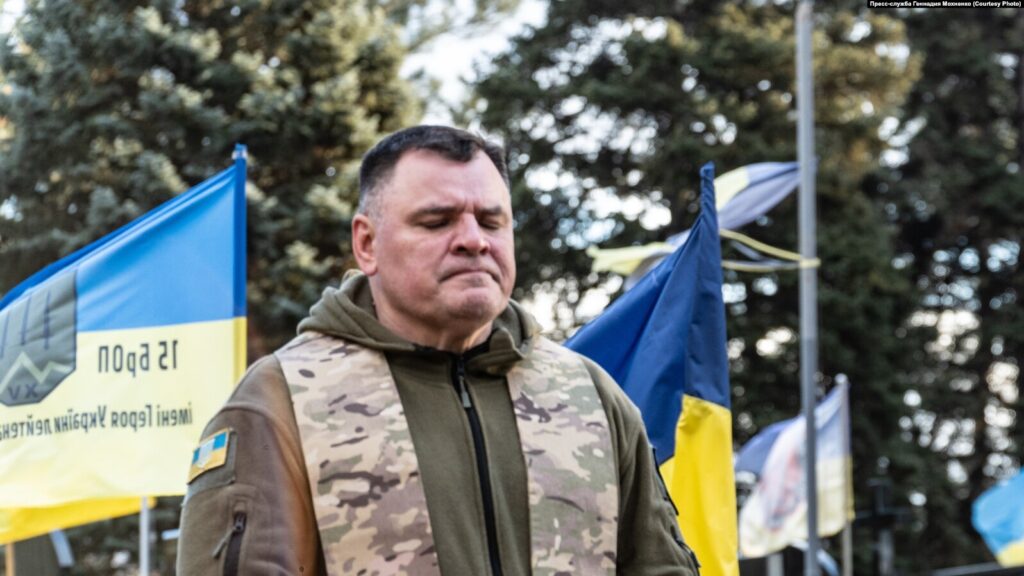
Are you surprised by the behavior of some Russian priests who have become a mouthpiece for war today, and their sermons are sometimes difficult to distinguish from military propaganda?
First of all, I’m glad that not everyone does. I know many priests who categorically opposed Putin’s intervention back in 2014, against the killing of opposition figures. But it’s not a large percentage. The majority of priests just keep quiet, trembling for their comfort. One of the Russian bishops recently said, ‘I had the honor to attend Putin’s speech to the Federal Assembly. I’ll tell you: I will support this candidate!’ Tears of laughter and shame streamed down my face for this moral monster calling himself a bishop. But this isn’t new, people in the church are made of the same stuff as those outside it. So cowardice, fear, desire for comfort and safety are not new.
There’s a concept called “running away from the cross.” Here, Christ says: “Do you understand who I am? I’m going to die, to give my life for people. Do you want to be my disciple? Take up your cross and follow me if you want. If you don’t want to – you run away from the cross,” which means you don’t speak the truth, you don’t stand up for justice. Unfortunately, many people are afraid, avoiding the cross. There were quite a few Reich bishops around Hitler. I call Putin’s ones Kremlin Reich bishops. There was a Reich bishop Müller who led a powerful stream of propaganda. They hung Nazi flags in churches next to Golgotha crosses.
But there were others. Martin Niemöller told Hitler to his face that he did not represent the German people, that priests bear responsibility for Germany. After that, he was subjected to searches, dragged through concentration camps.
There was Dietrich Bonhoeffer, who, when all of Germany was in ecstasy over the capture of France, said, “This is the beginning of the disaster for Germany. This will all end in great calamity.” He was involved in a conspiracy against Hitler, a pastor, a theologian. He was executed by personal order of Hitler a month before the victory.
Today, squares and universities in Germany are named after Dietrich Bonhoeffer, and my two sons go to a school named after Bonhoeffer. Someday, there will come a time when squares will be named after Navalny, after the Russian bishop Yuri Sipko, who has been speaking out about this war since 2014 while living in Moscow. Such a time will come, and shameful bishops will be swept away by history. Their names will be covered in shame.
-At the same time, the head of the Catholic Church, Pope Francis, recently faced criticism for his statement. The main idea was that negotiations between Russia and Ukraine are not Ukraine’s capitulation; it’s the courage not to drive Ukraine to suicide, which somewhat contradicts your thesis about a just war.
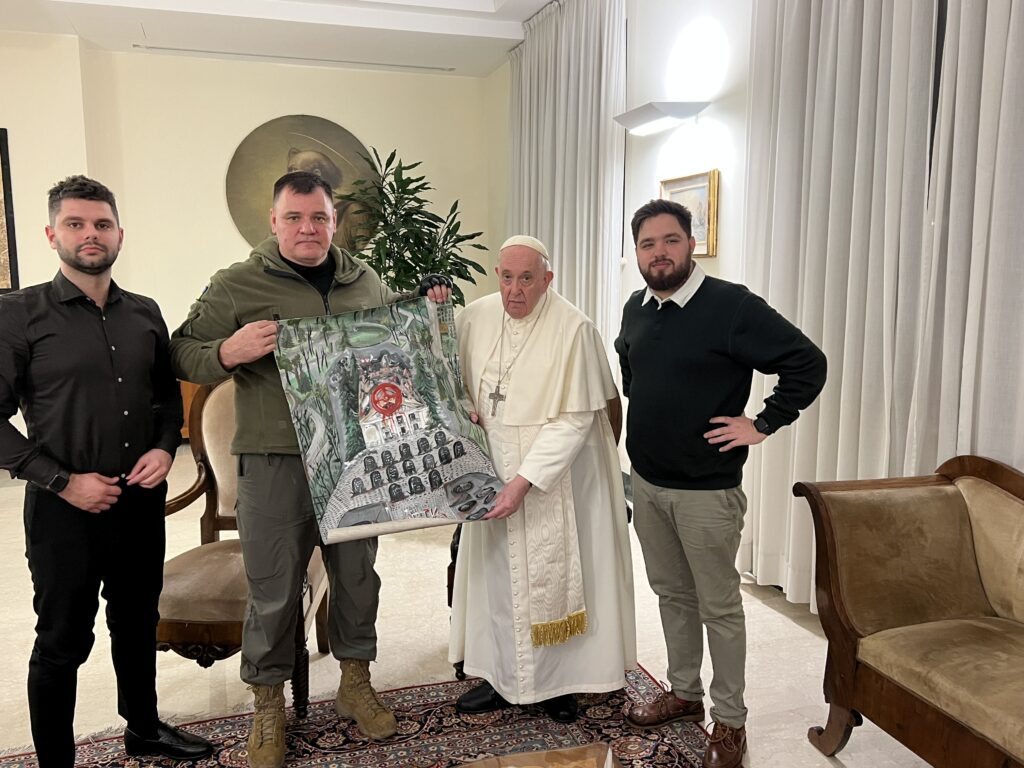
-It’s easier for me to evaluate the statements of the Pope because we’re acquainted. I was invited to an audience with him. We personally talked for an hour and a half, and the conversation left an interesting impression on me. I saw tears in his eyes when I talked about Mariupol. I know what he does for Ukraine. For example, I know for sure that the commanders of the Azov Battalion are free thanks to the assistance of the Pope.
It’s either a white flag over Kyiv or white smoke over the Kremlin.
I know that the Pope has done a lot for Ukraine. Regarding what he said in the interview, which hasn’t even been published yet but has already caused such a stir, I am very calm about it. The Pope is definitely not an enemy of Ukraine, and his interview does not contain calls to say, ‘To hell with it, let evil prevail.’ He wants everyone to reconcile. He wants everyone to live in peace. Of course, he calls for a peaceful resolution, negotiations based on justice, which will ensure long-term peace. The Pope is not a young man. A journalist sits with him, conducts a long conversation, and asks, ‘Some suggest that Ukraine should raise the white flag and surrender to avoid losing more people.’ The Pope says that sometimes raising the white flag is an expression of strength.
I can agree with that: sometimes that’s how life goes. But the situation in Ukraine is definitely not like that. We have two options: either a white flag over Kyiv or white smoke over the Kremlin. We will see how freedom breaks through in Russia. I sincerely wish Russia that.
For one simple reason: I’ve been forgiven too much.
Much has been said about guilt and responsibility in the context of the war in Ukraine, but Karl Jaspers also wrote about it. So I would like to talk to you about forgiveness as a common thread running through many religions. Are you capable of forgiving people who have come into your home and killed tens of thousands of people? And should Ukrainians, in general, forgive Russians, because hatred among Ukrainians in these circumstances, in my view, is quite understandable and justified? It seems that relations are irreparably damaged.
The Ukrainian people have every right to hate. When my friend once again spoke with the Pope and sent him a very harsh, terrible video, I chose not to watch it. My friend wrote, ‘Seeing this, don’t we have the right to hate?’ He warned that the video is horrifying and not easy to watch.
The Pope watched it and wrote what we need to start the conversation with: ‘Your people have the right to hate.’ We have the right to hate and demand just retribution, but then we enter into our ideological concept. As a Christian, I have no other answer than ‘we must,’ but everything in its proper order.
Hatred, anger – yes. Stopping the villain – yes. Holding the villain accountable – definitely. Then comes the difficult step – to forgive or not. Here, everyone decides for themselves. I consider Christ my teacher, I am given the commandment – to forgive. For one simple reason: I’ve been forgiven too much.